
I was always a good mom, but there came a point when I started to dislike the person I had become. Most of the time, I was optimistic and tried to focus on the positive, but there were moments when I felt utterly miserable. I never took that out on my baby girl, yet children are far more perceptive than we often give them credit for. They notice more than we realize. I knew I had to get to the root of my unhappiness because I didn’t like the unintentional lessons I was teaching my daughter. On one hand, I was showing her the value of marriage and perseverance, demonstrating that some things are worth working through even when life is hard. On the other, I was modeling the opposite of resilience—I was sitting in my own struggles. How could I tell her, “Getting knocked down is part of life, but it’s not okay to stay down,” when I was demonstrating the very opposite? I was tired of that contradiction, so I made a decision: I had to take action to heal—mentally, emotionally, physically, and spiritually.

I decided to leave my marriage and start over. For the first time, I became a single mother. My daughter had always known life with both parents under one roof. I had been married for eleven years and in that relationship for sixteen years before stepping away. It was, without question, one of the hardest decisions of my life. He was all I had known as an adult; we grew up together. Yet, in the process, I had lost myself—a common story for many women. But that wasn’t the only reason I left. The truth was, we didn’t grow apart because we never truly grew together.
Divorce forced me to pause and reflect on my role in the collapse of our marriage. I’m far from perfect, but this reflection ignited a desire to change. I wanted to evolve and become the best version of myself. That journey became my mission. I began a personal growth path not just for me, but for my daughter, too. I even started a blog to document my experiences and lessons, hoping to reach others navigating similar transitions. My daughter and I are learning together, exploring life with positivity as our guide.

The most powerful way I teach my teenage daughter positivity is by modeling it. The old saying, “lead by example,” has become my mantra. I maintain a hopeful outlook even in difficult situations. She witnesses my kindness, my efforts to take the high road, and my willingness to apologize when I’m wrong. Teenagers are impressionable, and I want my daughter to look up to me—not to be a carbon copy of me, but to be better. I want to provide a model of strength, resilience, and conscious growth.
I’ve introduced several key practices into my life to facilitate this transformation. I wanted this transition to occur in mind, body, and spirit, with my daughter observing and absorbing it all along the way.
The first change I embraced was choosing happiness and joy above all else. I committed to protecting my space from negativity, walking away from situations or people that threatened my peace. I realized that everything we do is a choice, and I chose positivity.
Next, I focused on my physical well-being. I began working out six days a week and overhauled my diet. I eliminated sugar and caffeine, experimented with veganism for six weeks, and eventually maintained a mostly plant-based lifestyle. Cutting processed foods and fueling my body with whole, fresh foods, coupled with regular exercise, helped me feel more energized and mentally clear. This physical transformation mirrored the internal clarity I was cultivating.
Spiritual practices became equally crucial. Each morning, before my feet even touch the floor, I say a prayer of gratitude for life and all it contains. I keep a gratitude journal, noting three things I’m thankful for daily, along with the desires and goals I hope to manifest. My daughter keeps her own journal, and through this practice, she learns the power of prayer, gratitude, and intention.

I also began prioritizing social interactions, stepping out of my comfort zone. As an introvert, social gatherings used to exhaust me, but I pushed myself to attend, staying only as long as I could comfortably engage. My daughter noticed, gradually embracing her own social opportunities. By modeling engagement and courage, I showed her the value of connection and growth outside our comfort zones.
At the same time, I learned to say no—to opportunities, requests, and situations that didn’t serve my purpose. “No, I’m not going to do that,” became a statement of empowerment, and I delivered it comfortably and confidently.
My daughter observes me navigating life’s challenges with determination. I may complain, express frustration, or even curse under my breath, but I always keep moving forward. I grant myself grace, and she witnesses the process. She sees me persevere, conquer obstacles, and continue growing—lessons far more impactful than words alone.

To support her journey, I encourage open dialogue. I ask thoughtful questions, guide her through problem-solving, and respect her viewpoints. I also let her express herself freely through clothing, art, makeup, and personal style choices—even if I personally wouldn’t choose them. She respects boundaries while enjoying autonomy, knowing our home is a safe space for self-expression.
I balance being both her mother and her friend. She knows she can come to me without judgment, and that I will listen and support her unconditionally. Boundaries remain clear, but love and guidance are ever-present. My daughter inspires me daily—proof that we can learn from each other in ways we never anticipated.
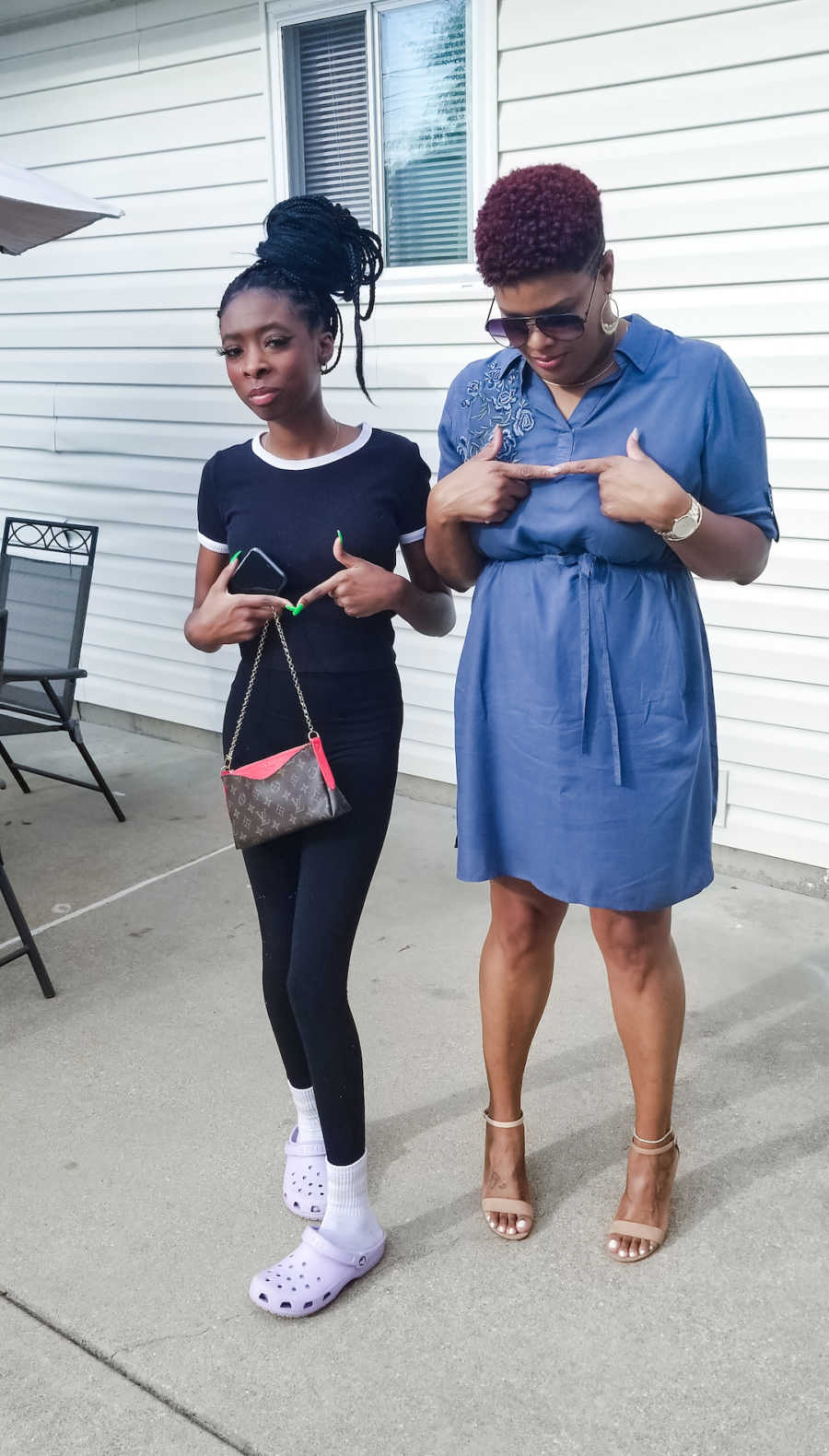
Through intentional action, communication, and example, we have cultivated a home of positivity. We are a “glass-half-full” duo, lifting each other up, growing together, and living our best lives. It’s happening, right now, and I couldn’t be prouder of the life we are building together.