In May of 2014, I learned I was pregnant for the second time. Just a few months earlier, in January 2014, my husband Eric and I had experienced pregnancy for the very first time, only to suffer a miscarriage. Because of that loss, I approached this pregnancy with cautious hope rather than pure excitement. I guarded my heart. To my surprise, everything progressed normally until I reached 16 weeks. That was when we found out we were having a baby boy—and that he was already measuring two weeks behind in growth. Soon after, he was diagnosed with severe intrauterine growth restriction (IUGR).
As the weeks went on, Matthew continued to fall further and further behind. My high-risk doctor explained that our goal was to get him to at least one pound before delivery for him to have even a fighting chance at survival. That one-pound mark was critical because it was the minimum size needed for his airway to fit the smallest ventilator tube available. Hearing that made the statistics feel painfully real, and I knew we were facing something incredibly serious. Eric and I chose the name Matthew, meaning “gift from God,” because we knew we would need faith to carry us through whatever lay ahead.
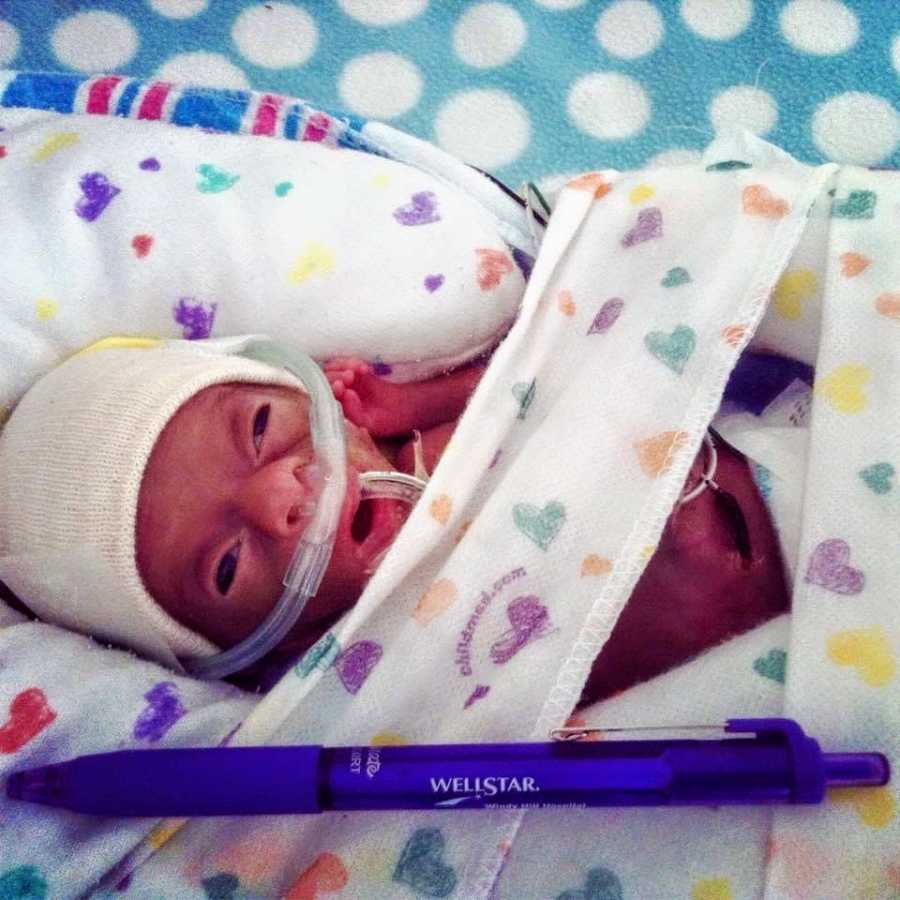
From the moment we learned about his diagnosis, Matthew had the odds stacked against him. He was fighting to live long before he ever took his first breath. From 16 weeks on, we understood his survival was never guaranteed, but we refused to give up on him. At exactly 29 weeks, doctors told me it was no longer safe for Matthew to remain inside me. The blood flow in his umbilical cord had begun to reverse, putting him at immediate risk of being stillborn. Although his ultrasound estimated his weight at just under one pound, it was safer for him to be born than to stay inside any longer.
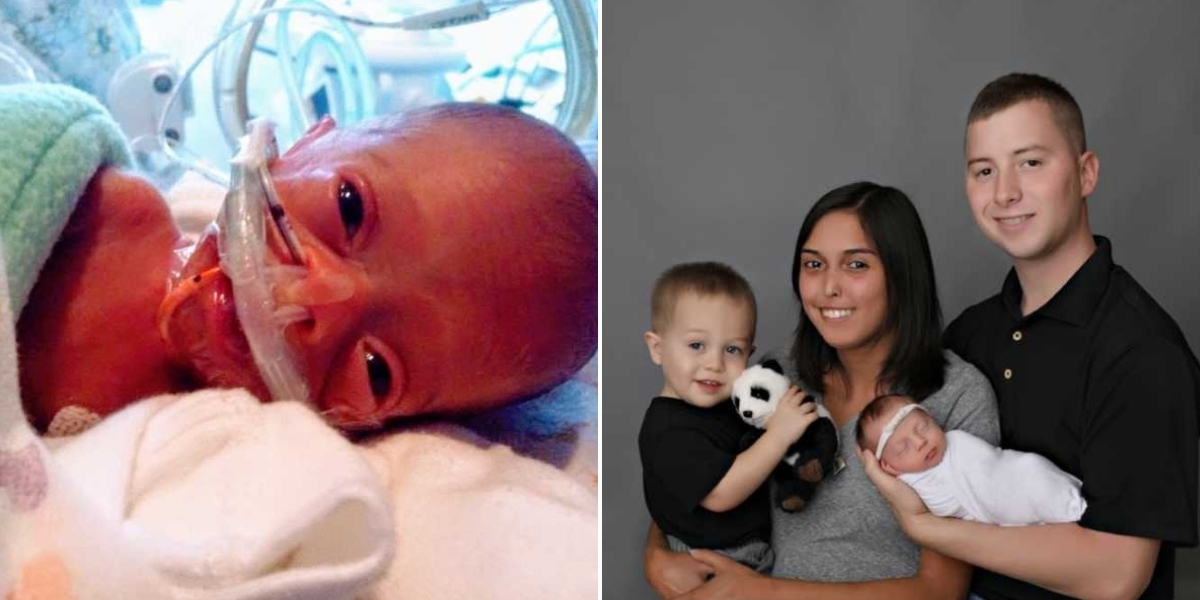
Matthew Allen China entered the world on November 6, 2014, at 11:33 a.m., via emergency C-section. He weighed only 13.6 ounces—385 grams—and measured just 10 inches long. Against all expectations, the most incredible part of his birth was that he came out breathing on his own. He became the smallest baby to ever survive delivery at Kennestone Hospital.
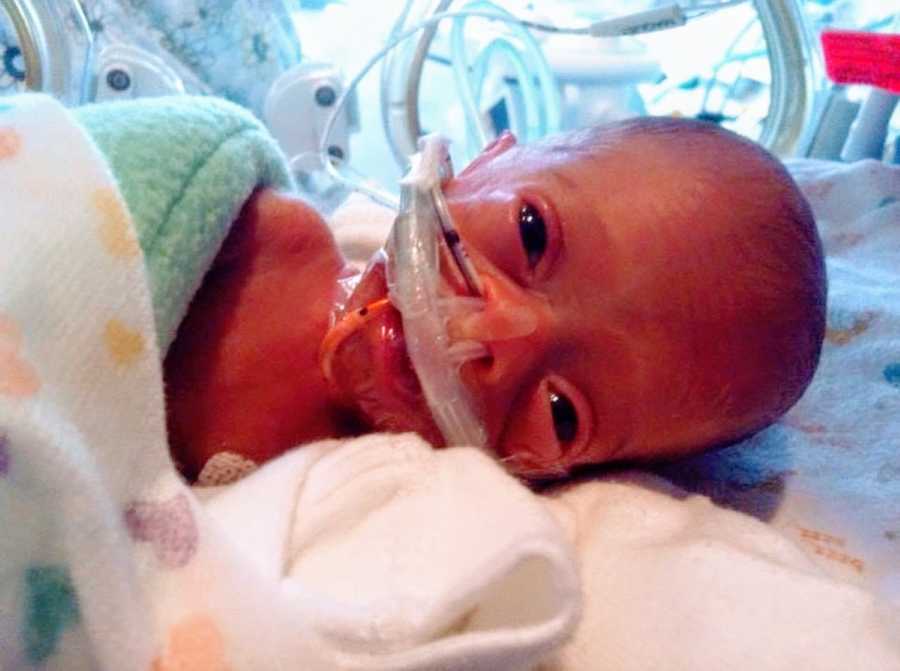
Every medical professional in the operating room was stunned. No one expected him to breathe independently, and many didn’t believe he would survive the delivery. Yet Matthew continued to surprise everyone, breathing on his own for more than two weeks. When his health began to decline, he was intubated at 15 days old—but by then, he had grown just enough to fit the smallest ventilator tube. That timing felt nothing short of miraculous, and the ventilator extended his life.
Matthew constantly battled infections. At one point, he had four infections simultaneously, and doctors feared he wouldn’t survive—but he did. He required frequent blood and platelet transfusions, and his organs never seemed to function the way they should. No one could fully explain why he struggled so much. He was often the sickest baby in the NICU, and while that was heartbreaking, it only deepened my love and determination to fight alongside him.
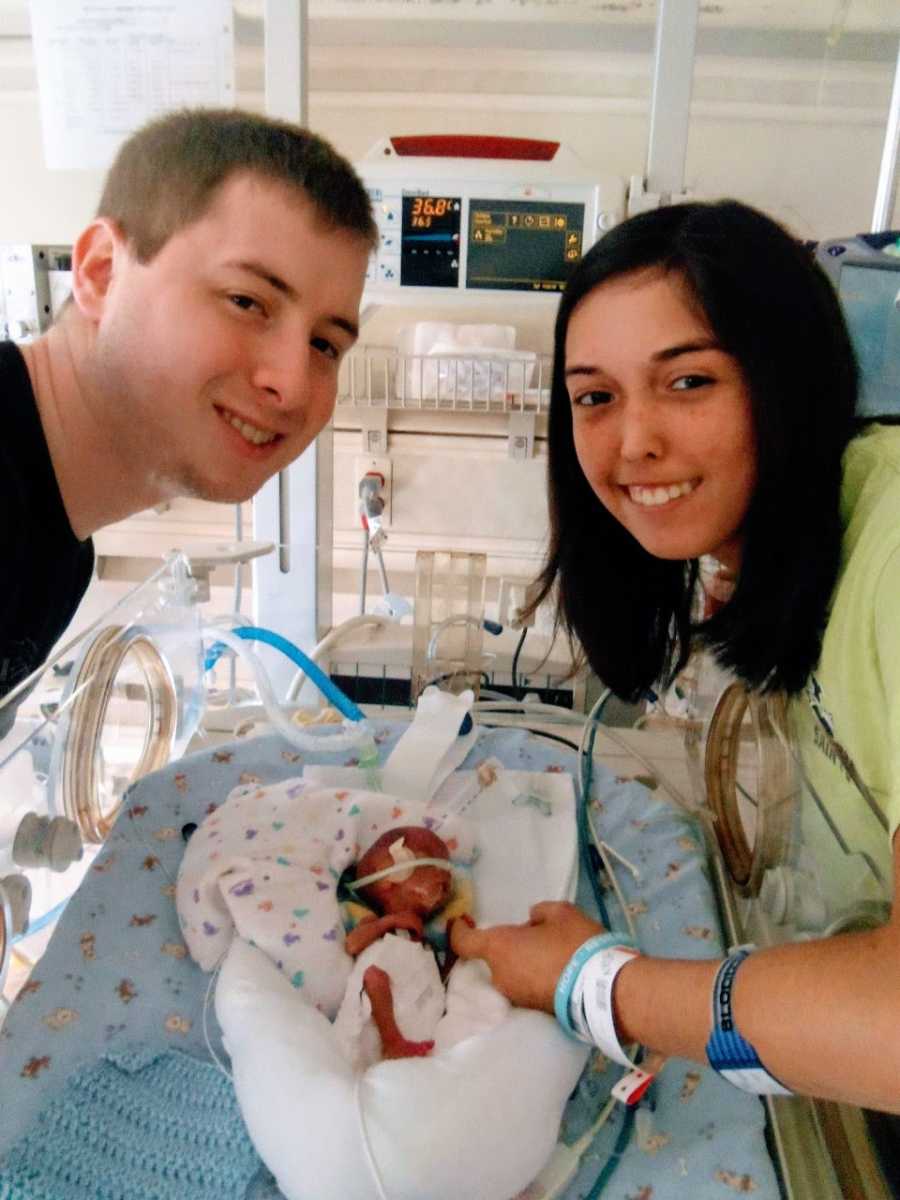
For three straight months, I visited Matthew every single day, spending eleven hours at his bedside. I arrived as soon as parents were allowed and left only at shift change. On especially difficult days, I would step out briefly for food and return right away. Eric visited in the evenings after work, but our schedules meant we only saw Matthew together on weekends. The NICU was a 45-minute drive from home, and every night I left, terrified that something might happen when I couldn’t get back quickly.
Knowing Matthew might never come home, I soaked up every possible moment. He fought to gain weight. He fought infections. He fought to breathe. He endured surgery, broken bones, and countless setbacks with unbelievable strength. I lost count of how many times he coded, but he always came back. Once, CPR went on so long doctors feared brain damage—yet Matthew never suffered a brain bleed. He remained alert, aware, and incredibly resilient.
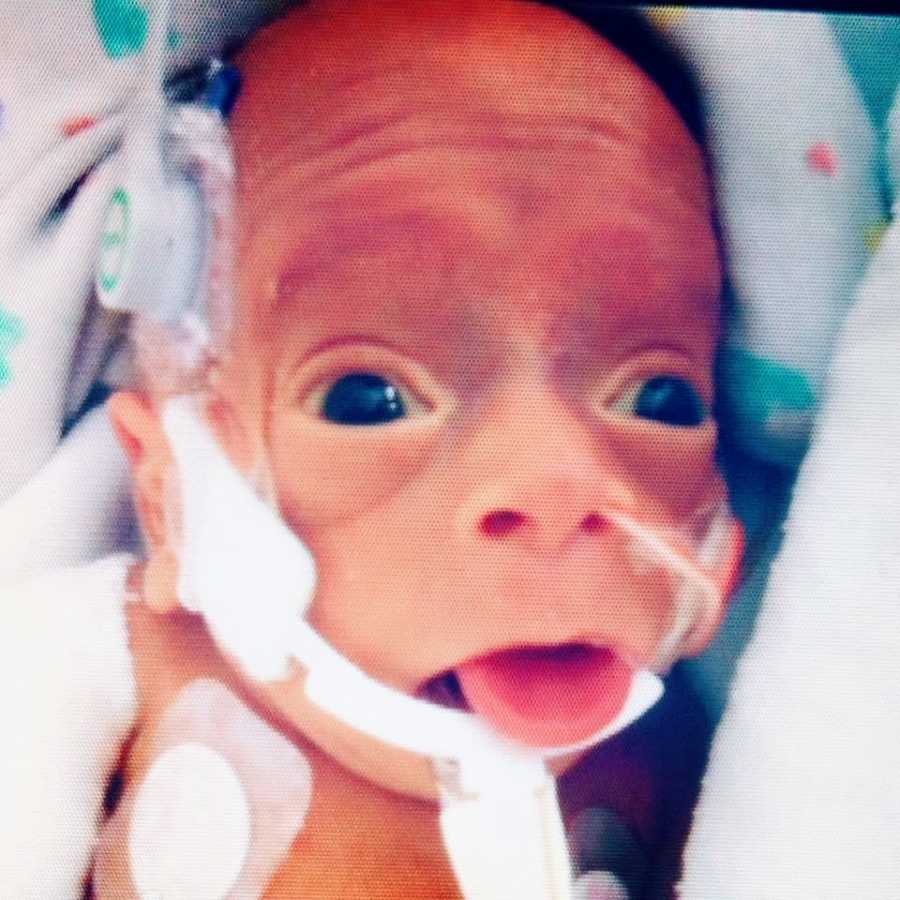
Though tiny in size, Matthew had an enormous personality. From the very beginning, he was animated and alert—far more than a typical 29-week preemie. He rarely slept, and when he did, nurses would check to make sure everything was okay. His wide eyes wrinkled his forehead, and he spoke volumes with his eyebrows alone. He had the funniest expressions, his tongue often sticking out, and the sweetest little hands and feet. He loved having his head rubbed so much that staff joked it should be the first response when alarms went off. He hated diaper changes and made sure you knew it, either with a pout or a perfectly timed stink eye. Sometimes, he’d pretend to sleep, peeking just enough to see if anyone was still watching. His personality filled the room.
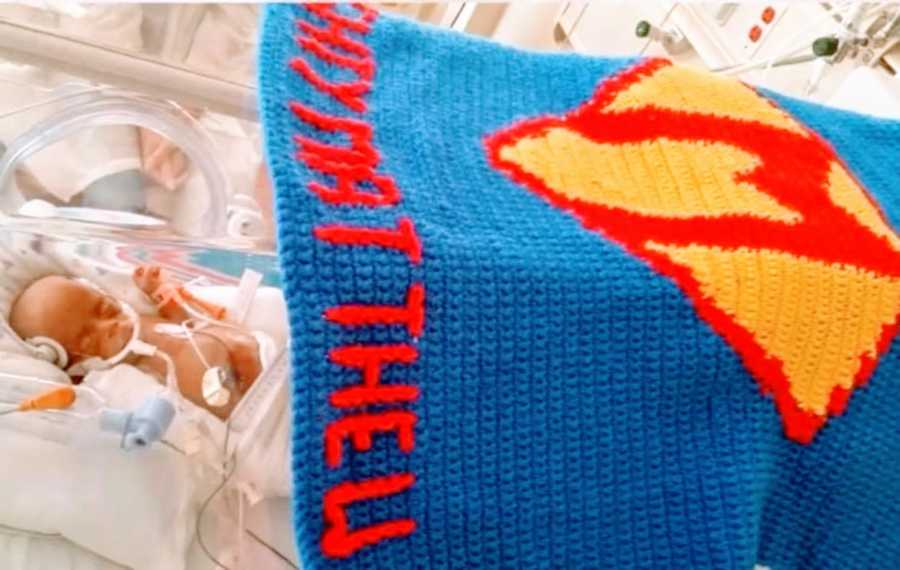
When I was wheeled into surgery for my C-section, I begged God not to let Matthew die. As time passed, I became more aware of the reality we faced. I prayed every night that if Matthew did die, I wouldn’t be absent—that he wouldn’t be alone. On February 6, 2015, that prayer was answered in the hardest way imaginable. I had been at the hospital less than two hours when everything suddenly changed. His decline was rapid and unexpected, but I was there with him.
Just minutes earlier, I had finished pumping milk, rubbing lotion on his back, laughing as he squirmed, and telling him I loved him. I debated taking his three-month photo and decided to wait. I never got that picture. During the code, I sat frozen as the nurse practitioner repeatedly asked if I wanted to hold him. Through tears, I kept saying, “No—keep trying.” When they asked how long to continue, I had no answer. When the nurse told me nothing more could be done, I knew this was the end. Time of death was called at 12:24 p.m. I collapsed into her arms as my heart shattered.
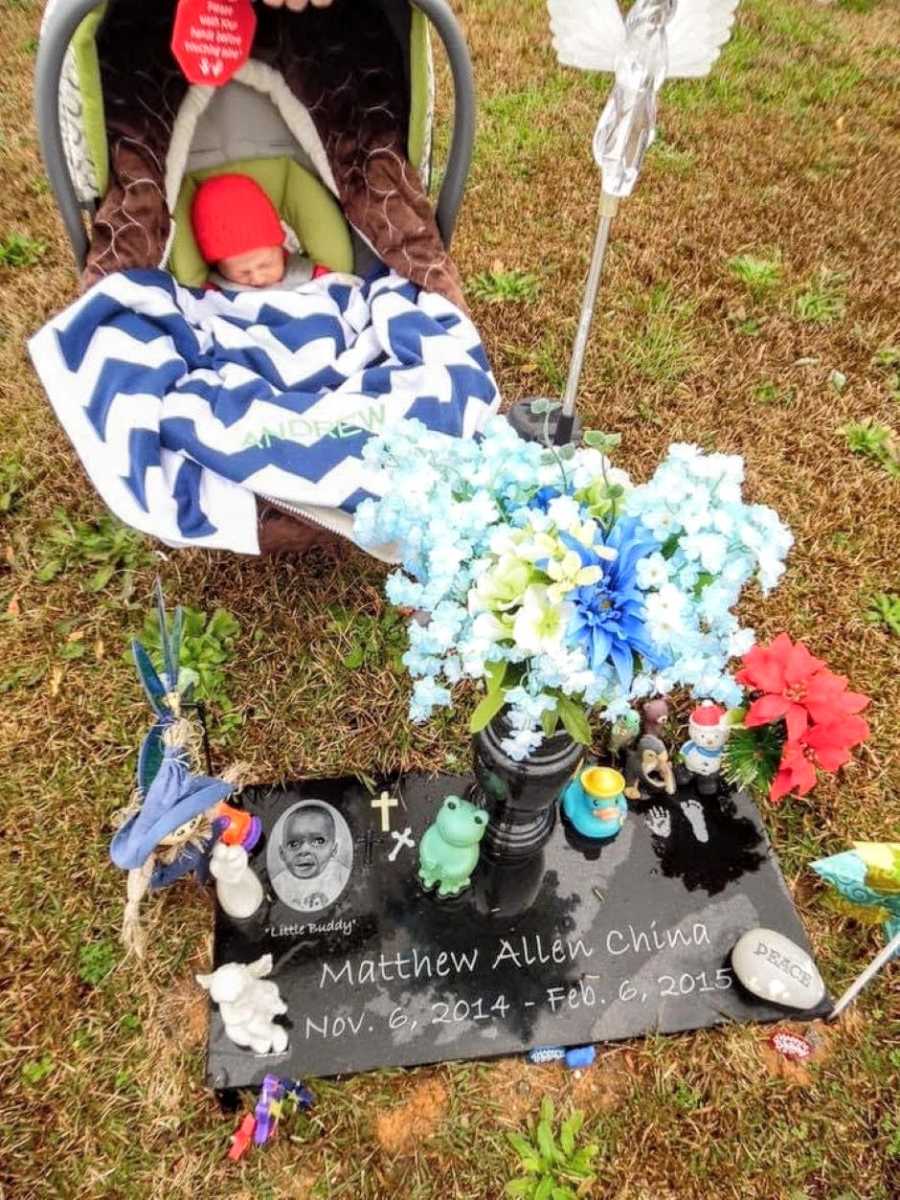
For the first and last time, I held Matthew without wires or tubes. His three-pound body was still, and the emptiness was unbearable. I had wanted to be there so he wouldn’t be alone—but now, I was the one left behind.
An autopsy later revealed Matthew had cytomegalovirus (CMV), which explained his ongoing illness. Because of him, hospital protocols changed, helping protect future babies. That knowledge brought closure and purpose to our pain.
After his funeral, grief consumed me. I stopped eating and sleeping. Two weeks later, I reached a breaking point and was hospitalized. Matthew’s primary nurse—the same one who stood by us throughout his life—saved me. She showed up on her day off, spoke at his funeral, and later brought me home from treatment. I owe her my life.
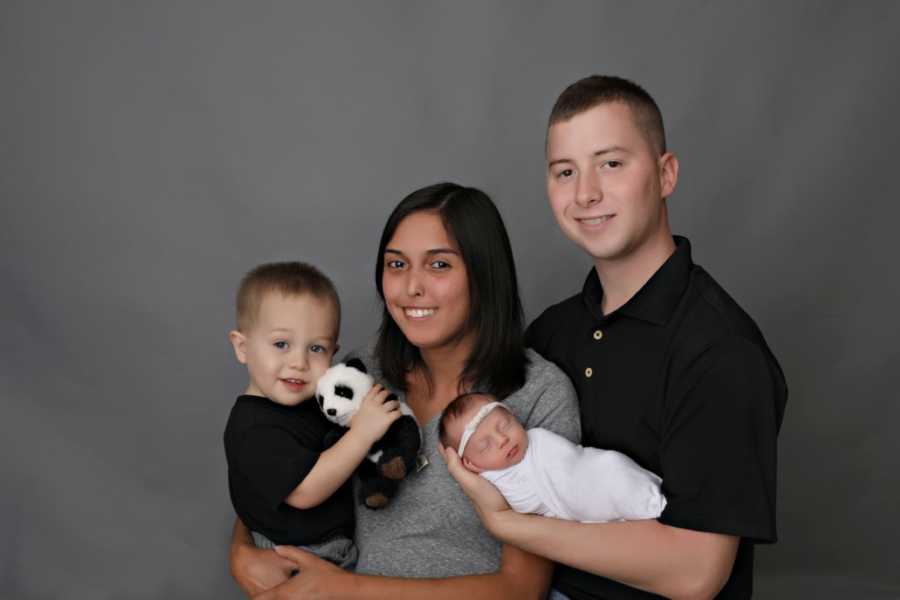
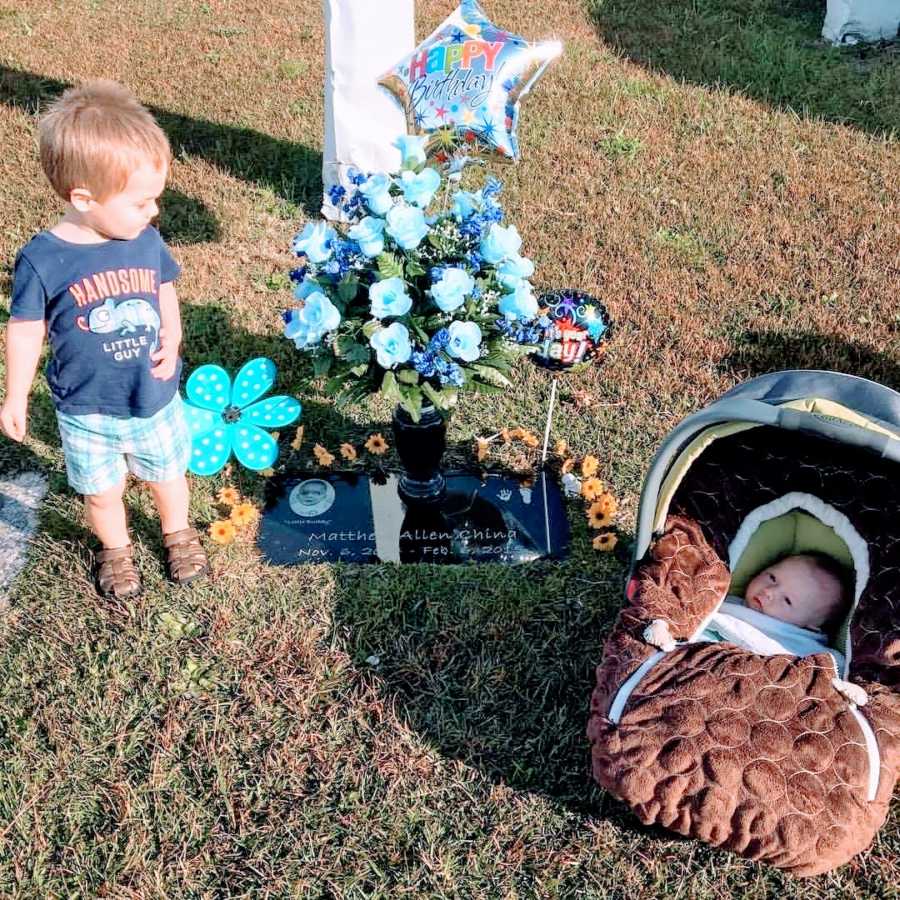
Two months later, I learned I was pregnant again. Andrew was born in December 2015, bringing light back into my darkness. Eventually, Allison followed. All three of my children were preemies, all three experienced the NICU, and all three remain forever connected.
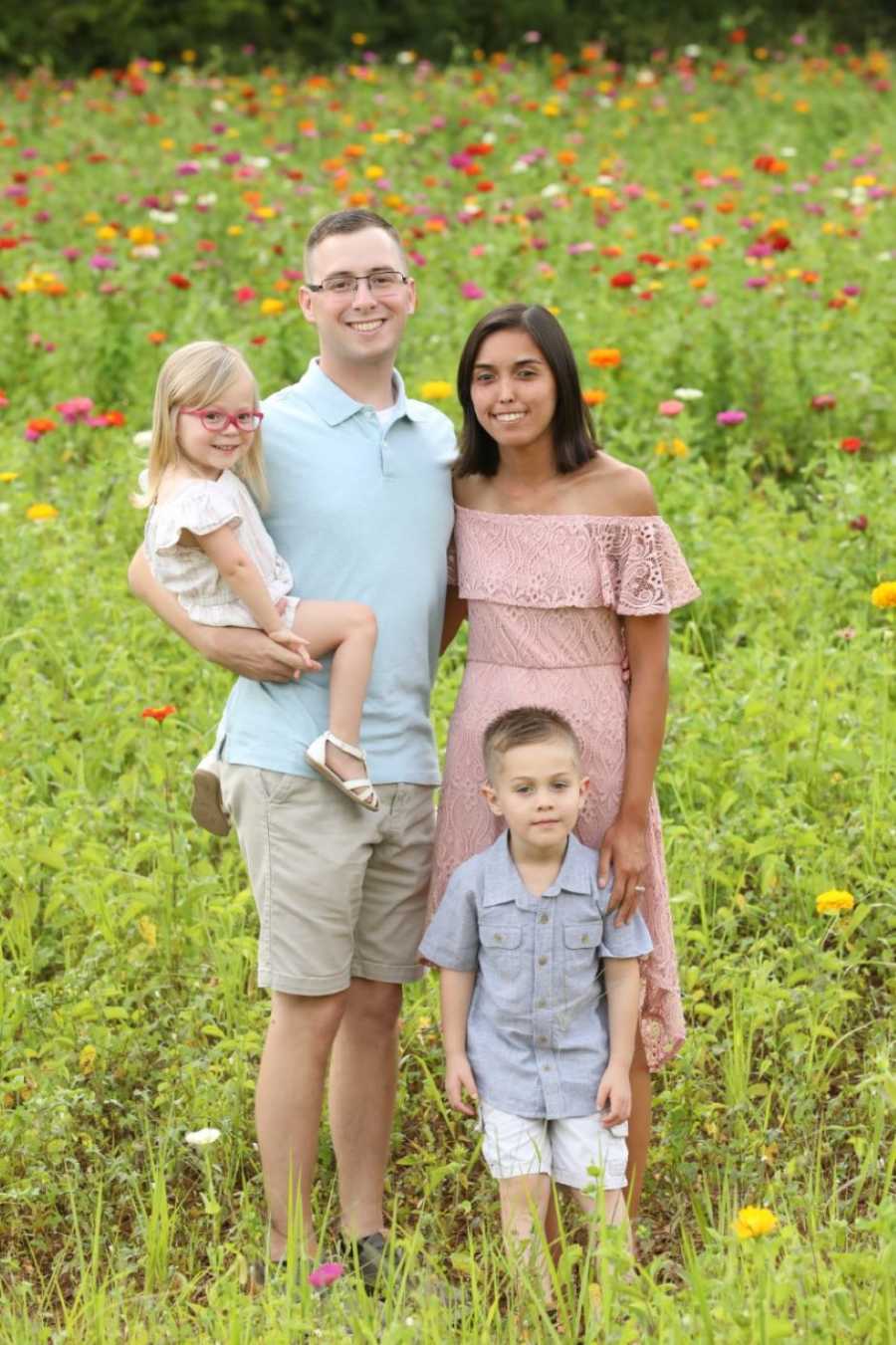
Matthew’s life changed everything. Andrew and Allison are here because of him—not instead of him. And if I could speak to my broken self from February 6, 2015, I would say this: Your arms won’t always be empty. You will survive this. And one day, joy will find you again.